Aalborg University
CECA x DIIS Talk Series #3: The instrumentalisation of migration: ‘Hybrid warfare’ at Europe's external borders?
Aalborg University Copenhagen
A. C. Meyers Vænge 15 (A)
1.001
2450 København SV
11.03.2026 Kl. 16:00 - 17:30

English

On location
Aalborg University Copenhagen
A. C. Meyers Vænge 15 (A)
1.001
2450 København SV
11.03.2026 Kl. 16:00 - 17:30
English
On location
Aalborg University
CECA x DIIS Talk Series #3: The instrumentalisation of migration: ‘Hybrid warfare’ at Europe's external borders?
Aalborg University Copenhagen
A. C. Meyers Vænge 15 (A)
1.001
2450 København SV
11.03.2026 Kl. 16:00 - 17:30
English
On location
Aalborg University Copenhagen
A. C. Meyers Vænge 15 (A)
1.001
2450 København SV
11.03.2026 Kl. 16:00 - 17:30
English
On location
From African soldiers recruited to fight in Ukraine to migrants pushed through the Białowieża Forest, the EU says migration is increasingly ‘weaponised’ as a tool of geopolitical power which, again, justifies harsh measures. This seminar brings together leading scholars to examine how migrants are increasingly ‘instrumentalised’ in ‘hybrid warfare’ strategies that blur the line between migration governance and coercion. We explore three frontlines:
- Russia & Ukraine – Recruiting the Global South
Since its 2022 invasion of Ukraine, Russia has expanded recruitment of foreign nationals through economic incentives and disinformation. Fighters and workers from Africa, Asia, and Latin America are targeted online, turning migration pathways into recruitment pipelines. - Poland & Belarus – The Forest Battlefield
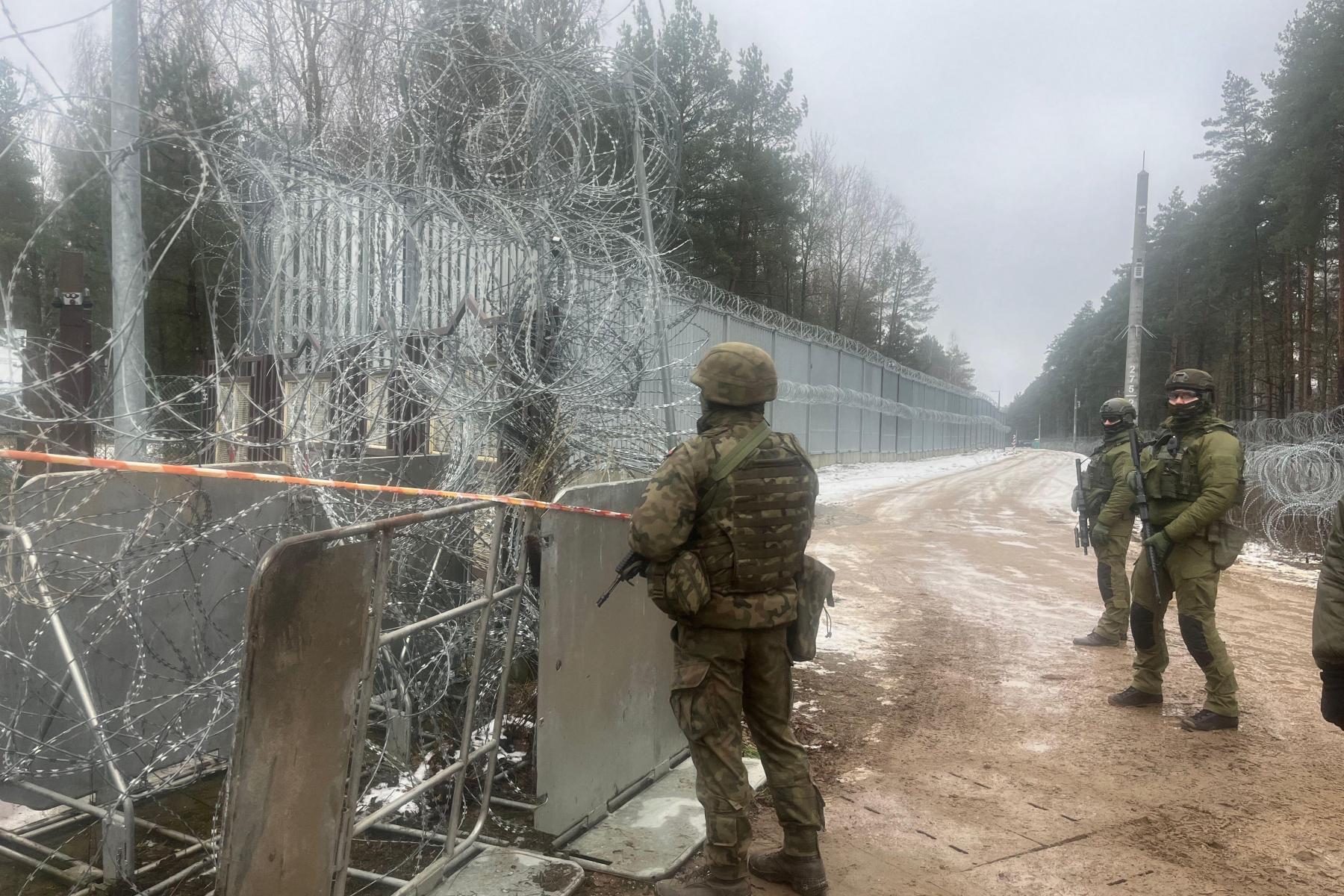
Since 2020, Belarus has directed migrants toward Poland in retaliation for EU sanctions. Poland’s fortified border and asylum suspensions have left migrants stranded in a militarised landscape. - The Sahel – A New Geopolitical Chess Game
Coups in Mali, Burkina Faso, and Niger have strengthened Russian influence, raising fears that migration may again be used as leverage against Europe.
Building on these cases, the seminar asks: How should the EU respond? Can Europe counter geopolitical disinformation targeting vulnerable populations? What happens to migrants caught in the crossfire of ‘hybrid warfare’? And can humanitarian values and asylum rights survive this era of weaponised migration?
Speakers
- Hans Lucht is a Senior Researcher in Migration and Global Order at the Danish Institute for International Studies (DIIS). His research focuses on undocumented migration from Africa to Europe via North Africa. Lucht’s core interests include migrant sending communities in West Africa; West African connection men and the organization of clandestine routes to Europe; high-risk migration on the Mediterranean Sea and in the Sahara Desert; European migration policies; global, social and existential anthropology. Hans Lucht’s work is based on ethnographic fieldwork in Ghana, Niger, Libya, Italy, and Greece.
- Signe Marie Cold-Ravnkilde is a Senior Researcher at the Danish Institute for International Studies (DIIS). She researches conflicts and Western interventions in Africa's Sahel region. Her work is based on ethnographic fieldwork and focuses particularly on understanding how international actors address security threats from terrorism, migration, and organised crime in light of regional geopolitical shifts.
- Karen Philippa Larsen is a Postdoctoral Researcher at the Danish Institute for International Studies (DIIS). She researches Russian hybrid warfare and nonconventional military forces, such as private military companies and recruitment of foreigners into the army. Her work is focused on the overlaps of Russian military and political actors both in a national and international context, and on the consequences for Russia of relying on alternative forces.
- Ahlam Chemlali is a Postdoctoral Researcher at Aalborg University, Society & Politics (CECA). She researches migration and borders, with a particular focus on European externalisation policies and their political, social and human consequences. Her work examines how Europe governs migration both within and beyond its territorial boundaries, including through partnerships with third countries, the outsourcing of asylum procedures, and external border control mechanisms.
Key takeaways
- Migration as political pressure — Russia and Belarus are manipulating migrant flows to destabilise and pressurise the EU.
- Increasing migrant volunerability — caught in geopolitical crossfire, they face deadly border crossings, and deceptive recruitment into the war industry and active combat.
- Europe struggles to find answers — balancing humanitarian values against security pressures.
Programme
- 16.00-16.10: Welcome and introduction, Ahlam Chemlali
- 16.10-17.00: Roundtable discussion, moderated by Ahlam Chemlali
- Poland and Belarus: Migration through the forest battlefield, Hans Lucht
- Russia and Ukraine: Recruiting the Global South for war, Karen Philippa Larsen
- The Sahel: Africa as geopolitical leverage, Signe Marie Cold-Ravnkilde
- 17.00-17.30: Q&A
Practical information
The seminar will be held in English. Participation is free of charge but registration is required via our registration form. The seminar will take place at Aalborg University Copenhagen, A. C. Meyers Vænge 15, 2450 København SV in Auditorium 1.001 in building A.